
Jewish Quarter Amsterdam and the Plantage District
Jewish Quarter Amsterdam and the Plantage District
Contenidos de esta página sobre Amsterdam
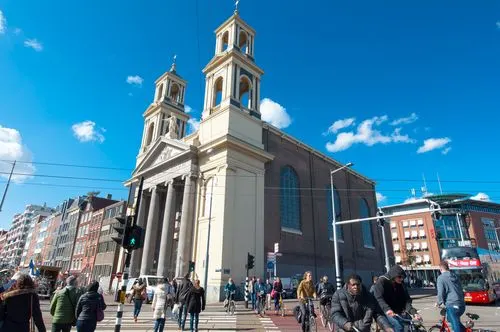
Before World War II, the largest concentration of Jews in Amsterdam was found in the Jewish Quarter (Jodenbuurt in Dutch).
Sadly, for that very reason it is one of the areas that suffered the most damage during the war, becoming a ghetto under Nazi occupation.
What to see in Amsterdam's Jewish Quarter and the Plantage
It isn't entirely clear where the Jewish Quarter ends and the Plantage begins (an area made up of summer houses belonging to wealthy families, built around 1680), so I'll group them together here. This is where you'll find the lovely Hortus Botanicus botanical garden, one of the oldest in the world, founded in 1638, and Artis, the city's largest and oldest zoo.
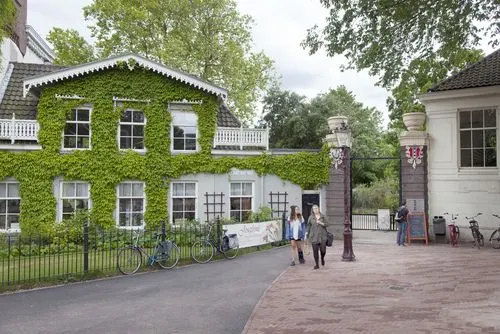
The Hortus Botanicus is home to more than 4,000 plant species across its 1.2 hectares, including impressive greenhouses such as the Butterfly House, with hundreds of tropical butterflies, and the Three Climates Greenhouse. It's the perfect spot to escape the bustle of the center and reconnect with nature.
Close by you'll also find the Dutch Resistance Museum, the well-known Hermitage Museum and the popular Waterlooplein market, open Monday to Saturday.
The Jewish Quarter is also home to the famous Portuguese Synagogue and the Jewish Historical Museum, two key places for understanding the city's recent past.
A good way to get to know the neighborhood is on a free tour. The free tour of the Jewish Quarter takes in many of the main sights in this part of Amsterdam, including the Auschwitz memorial. You can see this activity and book it on our list of the best free tours in Amsterdam.
Rembrandtplein
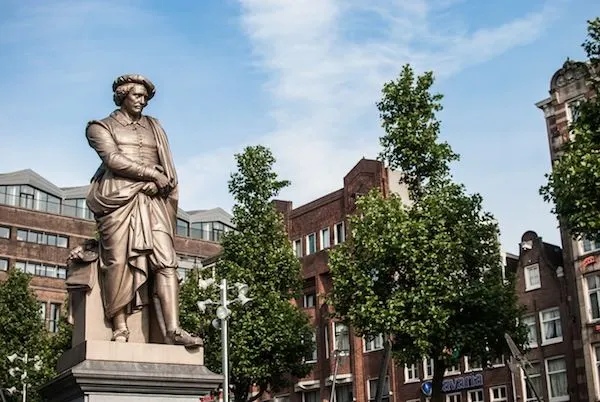
The area is also associated with the painter Rembrandt, since it's home both to the square that bears his name, Rembrandtplein, and to the Rembrandt House Museum.
Rembrandtplein, or Rembrandt Square, is dedicated to Rembrandt, the most important and influential artist in the Netherlands. His statue stands in the middle of the square and, incidentally, it's the oldest statue in Amsterdam.
The Anne Frank House
If you're interested in Jewish history, the Jewish Quarter is where you'll find Anne Frank‘s house. This is one of the most visited places in Amsterdam, along with the Van Gogh Museum, NEMO (the science museum) and the Rijksmuseum.
The Jewish Quarter's month of horror
In September 1943 the last Jewish residents of Amsterdam were driven out, the area was left empty and the synagogues were destroyed.
After the war, what had once been a neighborhood full of life was abandoned and forgotten. In 1953, 360 years after the arrival of the first Sephardic Jews from Spain and Portugal, reconstruction work began.
Getting there
You can reach the Jewish Quarter by metro, getting off at Waterlooplein station, just a few steps from the Jewish Historical Museum and the synagogue. For the Plantage area, your best bet is trams 4 and 14.